Singularity Index on November 28, 2026: 74.8/100

Singularity by Erwan

AI already solves open math problems. It does not improve itself yet.

Singularity Index, out of 100 · updated on · how it’s calculated

Latest milestone
Source: Epoch AI, ECIData from Nov 9, 2026
Over 30 days
Source: Site calculation: Epoch AI, Epoch Capabilities IndexData from Nov 9, 2026
AGI, median forecast
Source: Metaculus Q5121Data from Nov 5, 2026

What is the singularity?

The moment an AI becomes able to improve itself, faster than we can follow.

Since 1950, every machine computes more than the one before. Until now, humans design the next one. The singularity is the hypothesis that this stops being true: an AI strong enough to design a better AI, which designs an even better one, and so on.

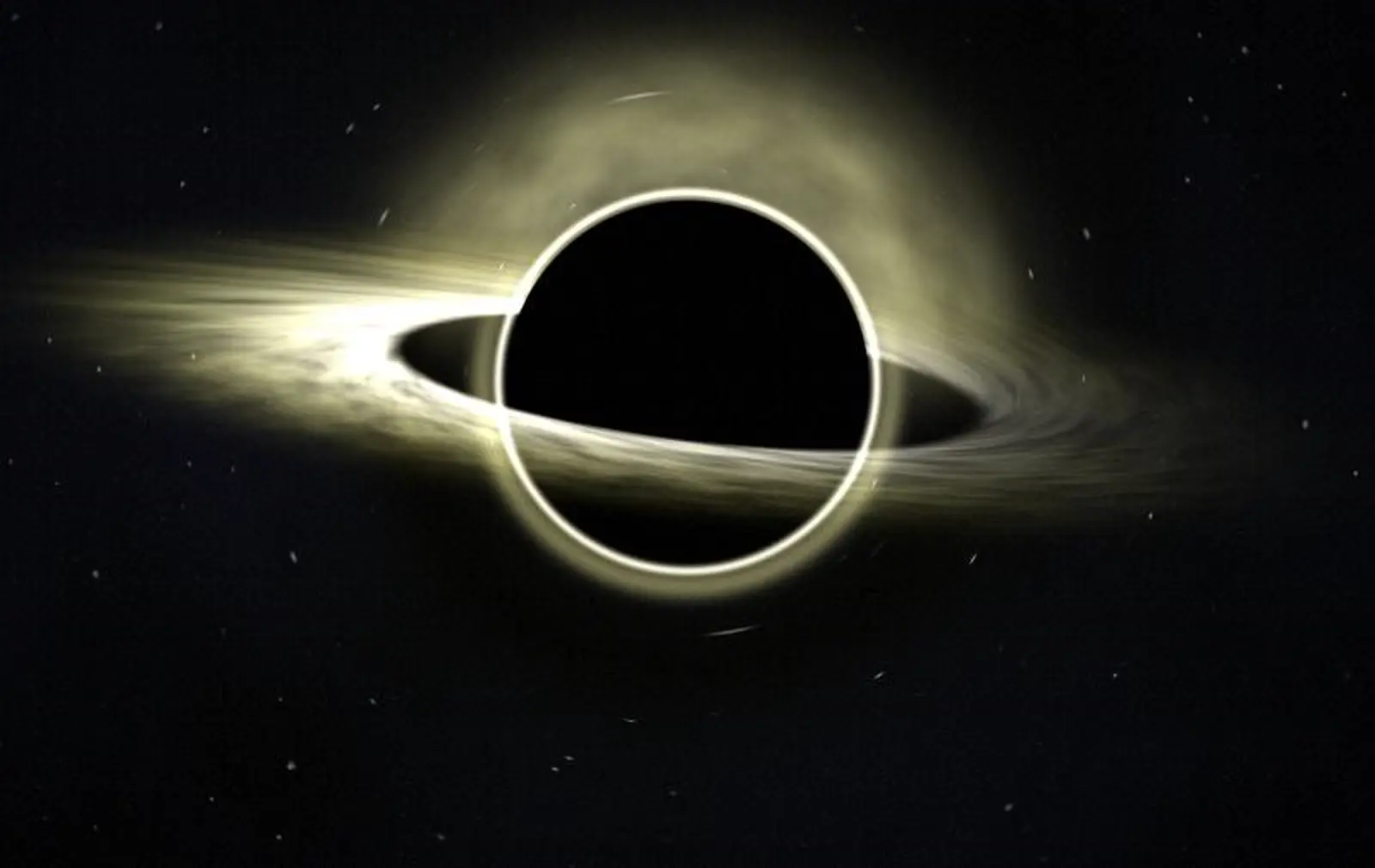
The name comes from black holes. Past the event horizon, light no longer escapes: you cannot see what lies behind. In the same way, nobody can predict the world after. This site does not say whether it will happen. It measures where we are.

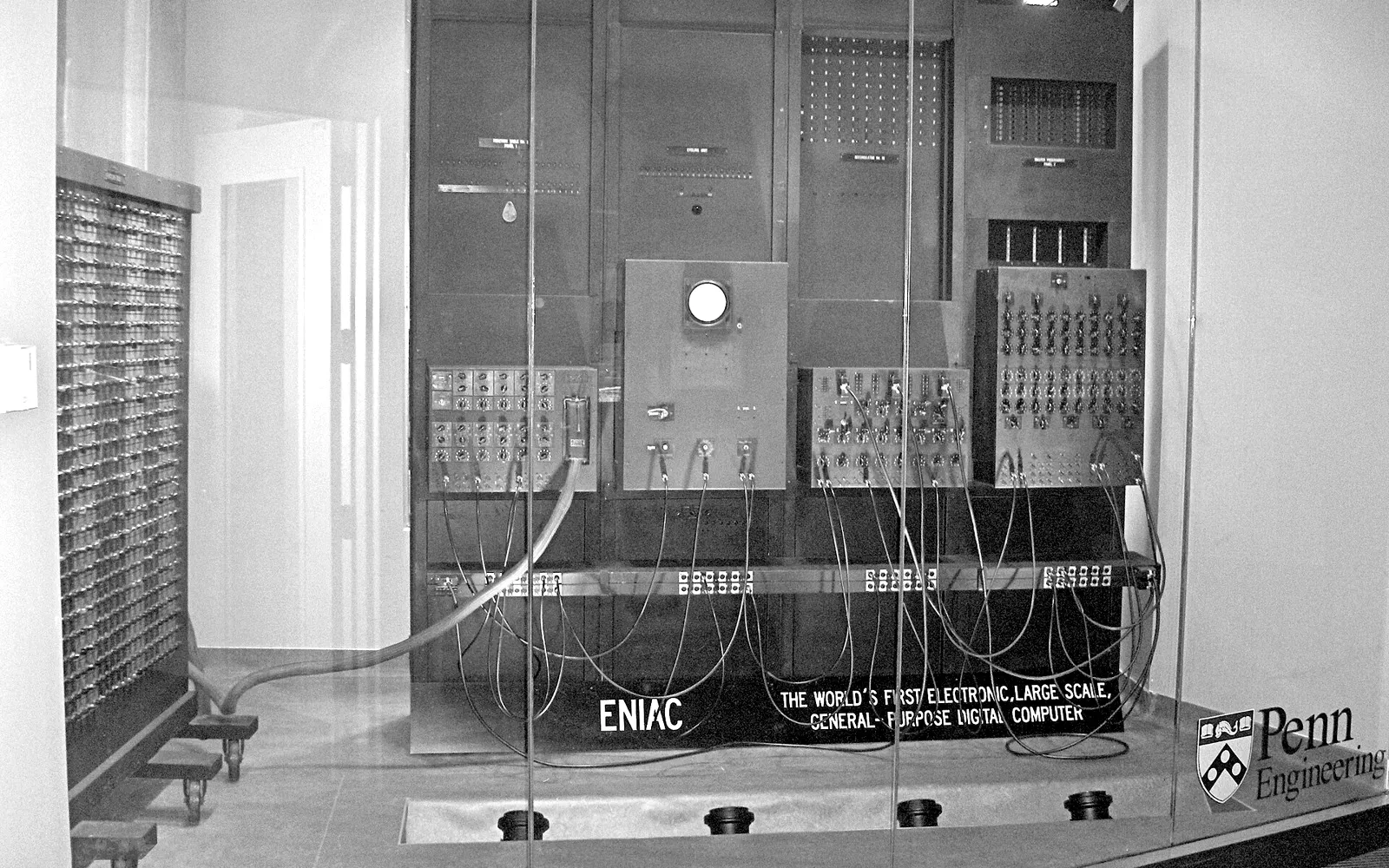
1946ENIAC, one of the first computers, filled a whole room.
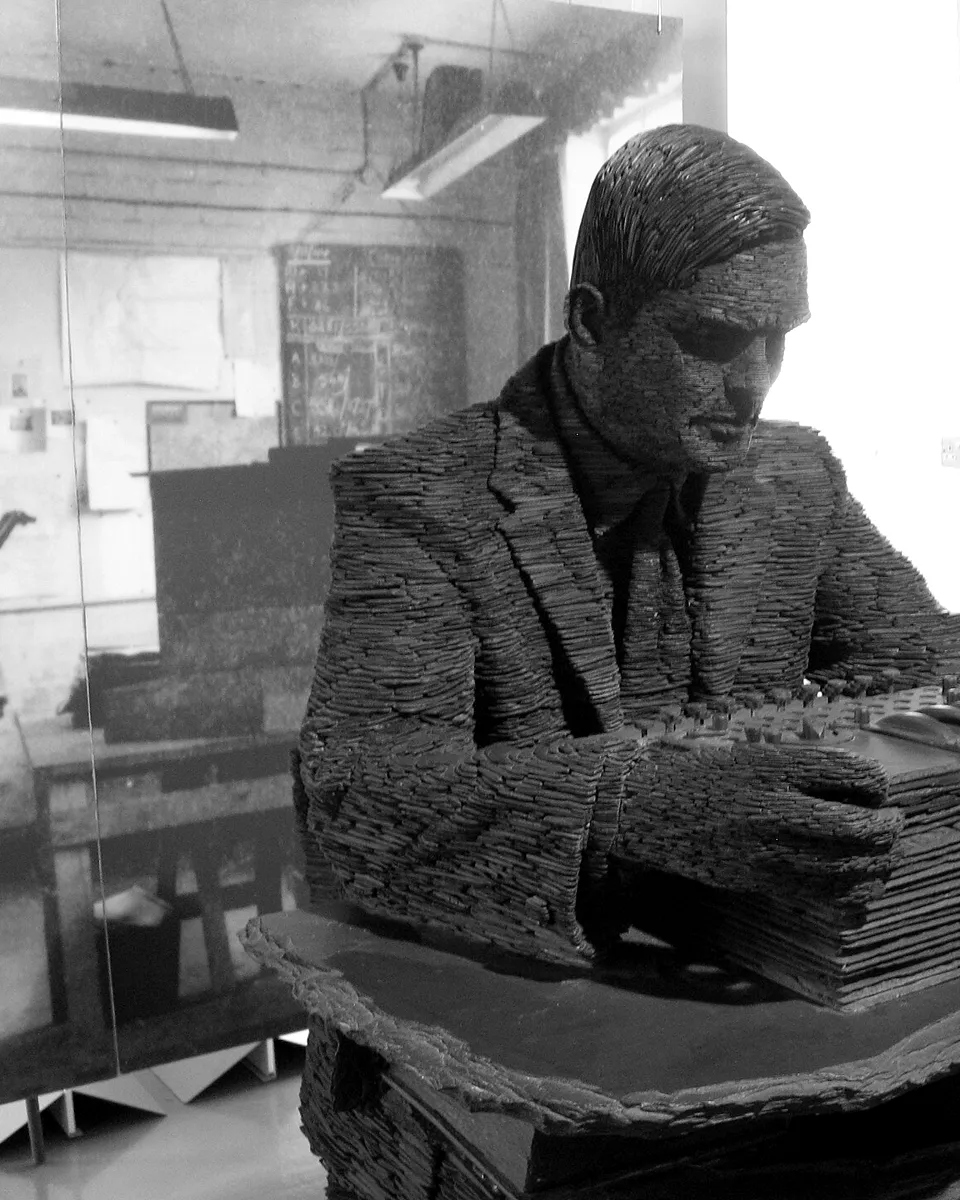
1950Alan Turing, slate statue at Bletchley Park. In 1950 he asks whether a machine can think.
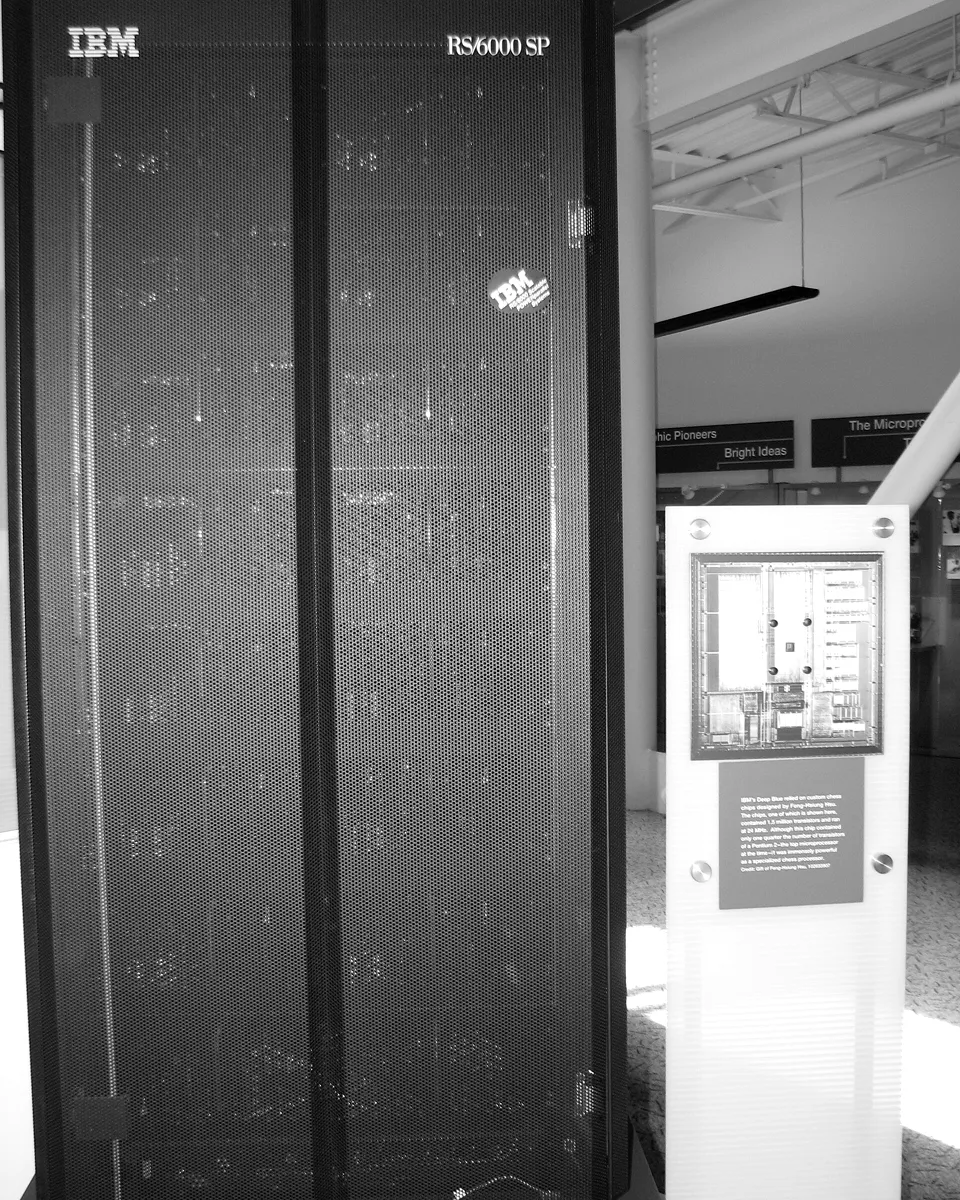
1997Deep Blue, the IBM machine that beat Kasparov at chess.
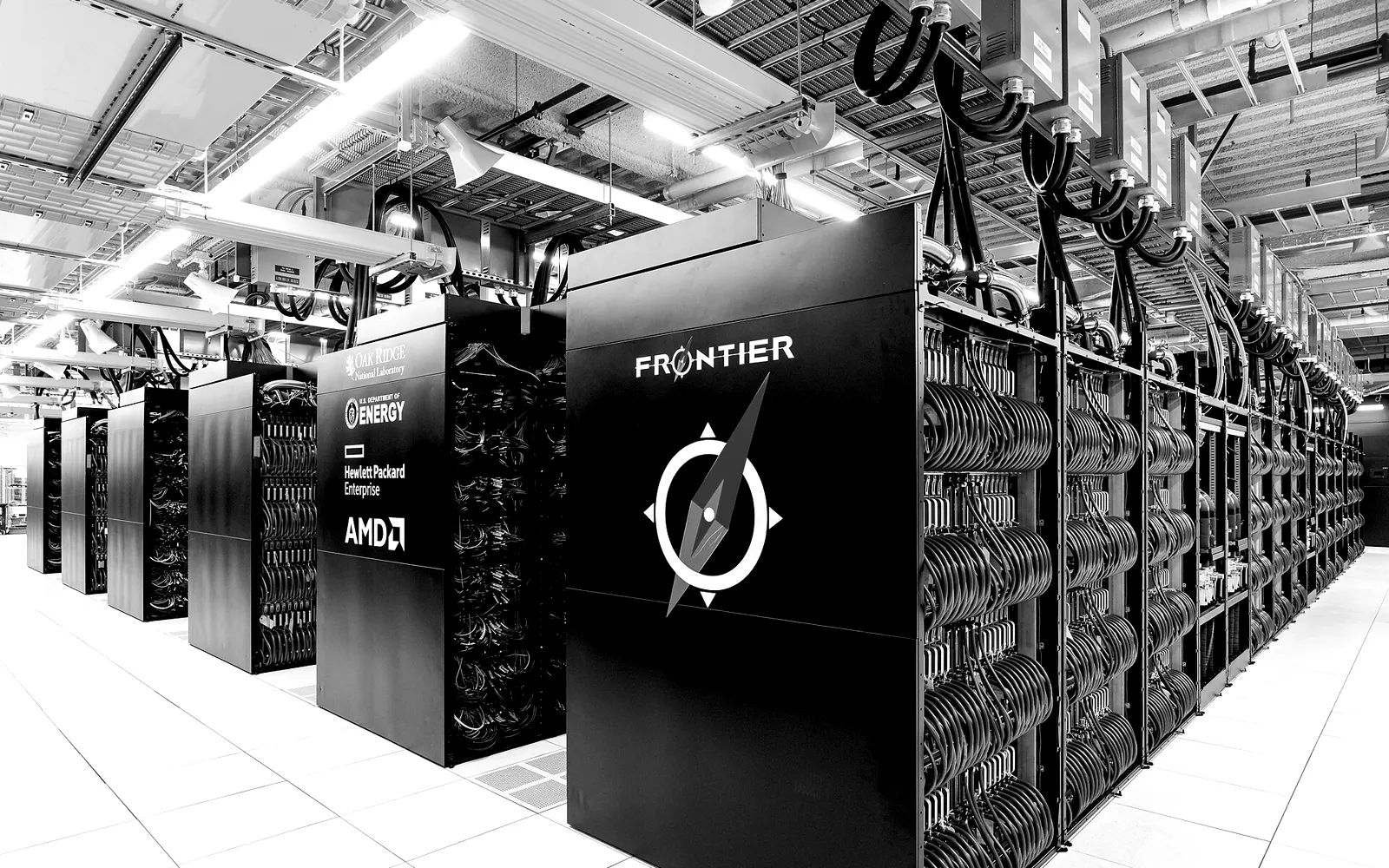
2022Frontier, the first supercomputer to pass the exaflop.

Three ideas, three dates

A mathematician in 1965, a science fiction author in 1993, an inventor in 2005. Each one brought the horizon closer.

  1. 1965 · Mathematician, Bletchley Park veteran

    I. J. Good

    “The first ultraintelligent machine is the last invention that man need ever make.”

    His idea: a machine smarter than us could design an even better machine. Intelligence would run away. This is the “intelligence explosion”.

    Source: Good, Advances in Computers vol. 6, 1965

  2. 1993 · Mathematician and science fiction author

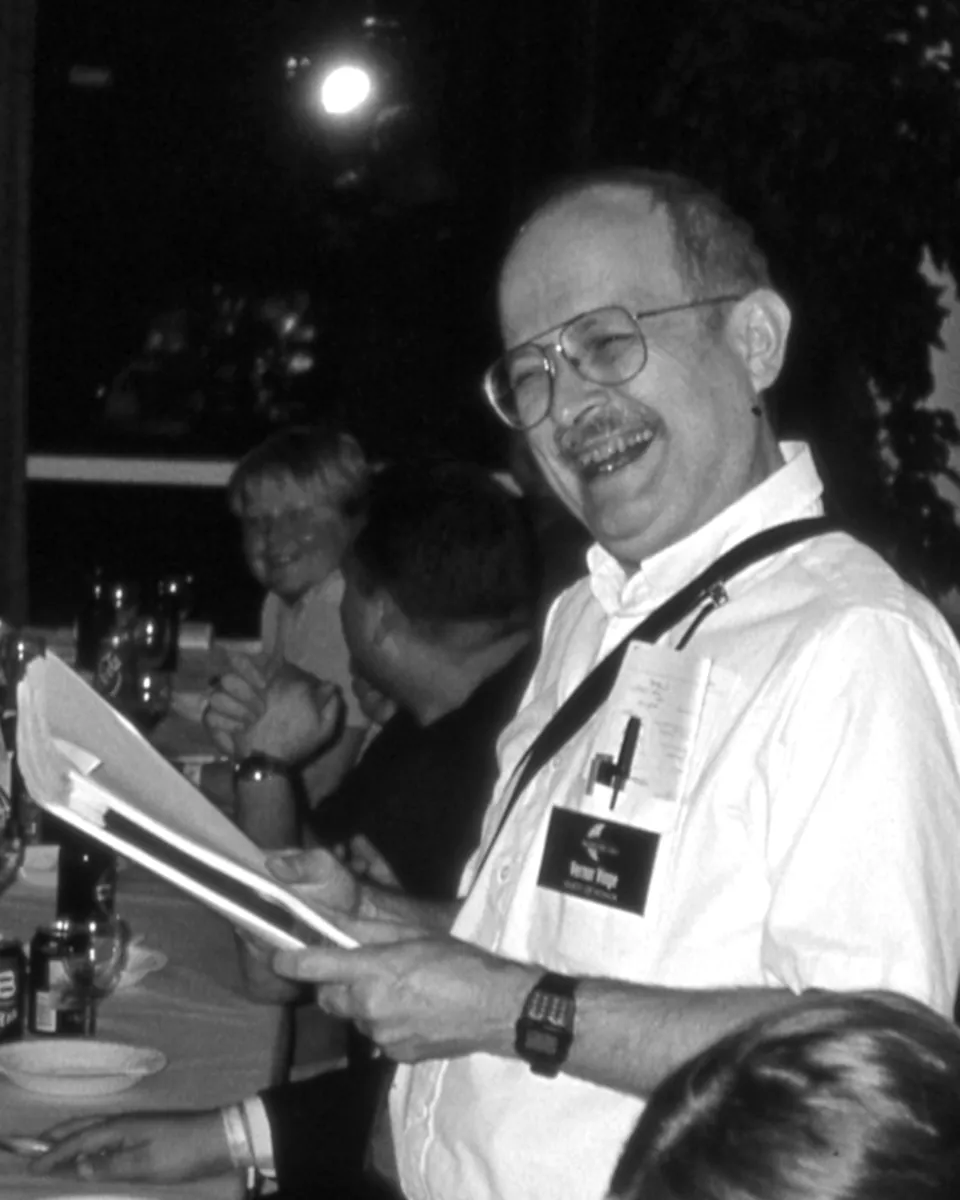
    Vernor Vinge

    “Within thirty years, we will have the technological means to create superhuman intelligence.”

    He calls “singularity” the point beyond which we can no longer predict what comes next, like the horizon of a black hole that no light crosses.

    Source: Vinge, The Coming Technological Singularity, 1993

    Portrait of Vernor Vinge
  3. 2005 · Inventor and futurist

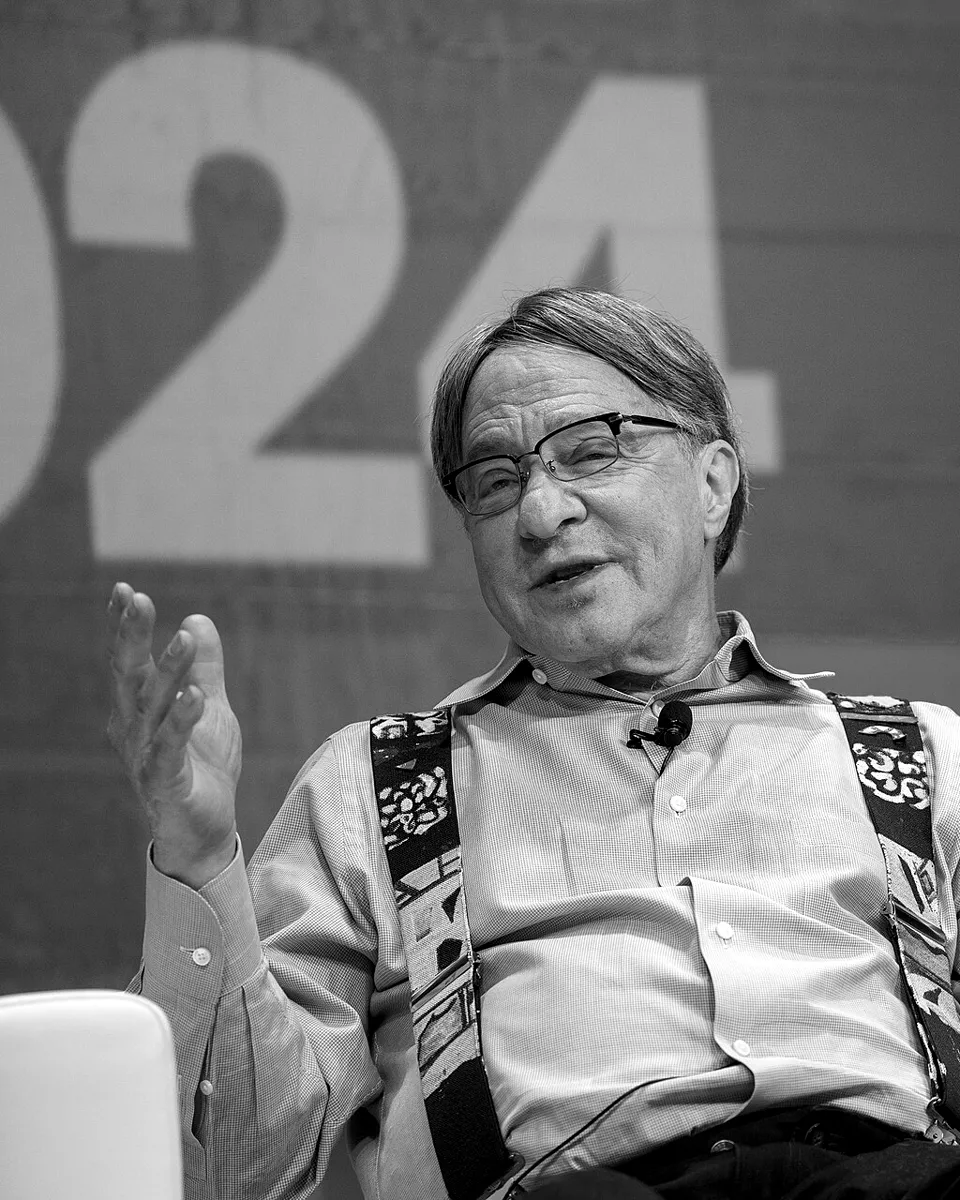
    Ray Kurzweil

    “I set the date for the Singularity as 2045.”

    In The Singularity Is Near, he extends the exponential curves of computing: human-level AI in 2029, human-machine merger in 2045.

    Source: Kurzweil, The Singularity Is Near, 2005

    Portrait of Ray Kurzweil

The missing loop

AIs already help build AIs. In 2025, Google DeepMind’s AlphaEvolve sped up a key computation in Gemini’s training by 23%.

But a human still chooses what to improve, and checks the result. The full loop, without us, has never been observed. It is the central condition of the singularity: it is not met yet.

Source: Google DeepMind, AlphaEvolve, May 14, 2025

  1. AI designs
  2. a better AI
  3. which designs faster
  4. an even better AI

Todaya human still closes the loop

Compute record: 4.0 × 10¹ FLOP

From 1950 to today

25 milestones. The further down you go, the bigger the black hole grows: its size follows each year’s compute record.

  1. October 1, 1950 · AI

    Alan Turing publishes “Computing Machinery and Intelligence” and proposes the imitation game.

    Why it matters. “Can machines think?” becomes something you can test.

  2. August 1, 1956 · AI

    The Dartmouth summer workshop: McCarthy, Minsky, Shannon and Rochester coin “artificial intelligence”.

    Why it matters. The field is born, with the stated goal of matching humans.

  3. January 1, 1961 · Robotics

    The first industrial robot is installed on a General Motors line.

    Why it matters. Machines start acting in the physical world.

  4. January 1, 1965 · AI

    I. J. Good: the first ultraintelligent machine will be “the last invention” humanity ever needs to make.

    Why it matters. The core idea of the singularity: an AI that designs a better AI.

  5. April 19, 1965 · Compute

    Gordon Moore predicts the number of transistors per chip will keep doubling.

    Why it matters. Six decades of exponential computing power start here.

  6. July 1, 1976 · Math

    Appel and Haken prove it with the help of a computer.

    Why it matters. The first major mathematical proof too long to check by hand.

  7. March 30, 1993 · AI

    Vernor Vinge: “within thirty years, we will have the technological means to create superhuman intelligence”.

    Why it matters. The word “singularity” enters the debate, with a deadline.

  8. May 11, 1997 · AI

    IBM’s computer wins a six-game match against the world chess champion.

    Why it matters. A machine masters a symbol of human intelligence.

  9. October 8, 2005 · Robotics

    Stanford’s self-driving car wins the DARPA Grand Challenge: 212 km with no driver.

    Why it matters. Modern autonomous driving begins.

  10. September 30, 2012 · AI

    A deep network trained on GPUs crushes the ImageNet competition.

    Why it matters. Deep learning becomes the dominant method.

  11. March 15, 2016 · AI

    DeepMind wins 4 to 1 against one of the best Go players in the world.

    Why it matters. Move 37: a machine finds an idea no human would have played.

  12. June 12, 2017 · AI

    “Attention Is All You Need” introduces the architecture behind LLMs.

    Why it matters. Every frontier model descends from it.

  13. November 30, 2020 · Biology

    DeepMind predicts the 3D shape of proteins with experimental accuracy at CASP14.

    Why it matters. A 50-year-old problem in biology falls.

  14. May 30, 2022 · Compute

    Frontier, at Oak Ridge, passes a billion billion operations per second.

    Why it matters. A thousand times the petaflop, fourteen years later.

  15. November 30, 2022 · AI

    OpenAI opens a conversational assistant to the general public.

    Why it matters. General AI becomes an everyday topic.

    Source: OpenAI

    Share
  16. December 14, 2023 · Math

    An LLM paired with an evaluator finds new constructions for the cap set problem.

    Why it matters. The first new mathematical discovery made by an LLM.

  17. July 25, 2024 · Math

    AlphaProof and AlphaGeometry 2 solve 4 of the 6 problems of IMO 2024.

    Why it matters. Competition-level mathematical reasoning is reached.

  18. October 9, 2024 · Biology

    Hassabis and Jumper (AlphaFold) share the Nobel Prize in Chemistry with David Baker.

    Why it matters. Science honours a discovery made by an AI.

  19. October 31, 2024 · Robotics

    Physical Intelligence releases a single policy that folds laundry, clears a table and assembles a box.

    Why it matters. Foundation models arrive in robots.

  20. May 14, 2025 · Math

    A Gemini agent finds a 48-multiplication algorithm for 4×4 complex matrices, a record since 1969.

    Why it matters. AI improves the algorithms that run AI.

  21. July 21, 2025 · Math

    Gemini Deep Think officially reaches gold-medal level at IMO 2025, in natural language.

    Why it matters. Problems no longer need translating into a formal language.

  22. April 7, 2026 · AI

    Claude Mythos Preview succeeds 50% of the time on tasks that take a human expert about 1,045 minutes.

    Why it matters. Measured by METR: the length of autonomous tasks doubles every few months.

  23. September 3, 2026 · Compute

    GPT-6 Astra: about 9.4 × 10²⁶ FLOP of training, an Epoch AI estimate.

    Why it matters. About 45 times GPT-4, three and a half years later.

  24. October 27, 2026 · Math

    A new bound on the matrix multiplication exponent is published.

    Why it matters. The most discussed result of 2026’s wave of AI-assisted results. A claim of exact equality remains unverified.

  25. November 9, 2026 · AI

    Claude Fable 5.2 reaches 173.2 on the Epoch Capabilities Index, the highest score measured.

    Why it matters. An index that aggregates dozens of benchmarks.

Milestones chosen by Erwan, updated on November 28, 2026. Every card links to its source.

Five curves, all sourced

Hover or tap a curve to read each point. Under each chart: the source, the date and the raw data.

Compute has grown by 10⁹

In 14 years, the largest training run went from 2.6 × 10¹⁸ to 9.4 × 10²⁶ FLOP, about ×10⁹. The current record: GPT-6 Astra (Sep 2026). Each grey dot is a model, the yellow line follows the record.

Source: Epoch AI, Notable AI Models · retrieved Nov 28, 2026 · CC BY 4.0

Log scale: each tick is ×10. Some recent estimates are marked “speculative” by Epoch AI.

See the data
Compute records
DateModelFLOP
Jan 16, 2013DistBelief NNLM2.6 × 10¹⁸
Jun 18, 2014SPPNet3.4 × 10¹⁸
Sep 4, 2014VGG191.1 × 10¹⁹
Sep 4, 2014VGG161.2 × 10¹⁹
Sep 10, 2014Seq2Seq LSTM5.6 × 10¹⁹
Dec 3, 2014SNM-skip3.0 × 10²⁰
Oct 1, 2015AlphaGo Fan3.8 × 10²⁰
Jan 27, 2016AlphaGo Lee1.9 × 10²¹
Sep 26, 2016GNMT6.6 × 10²¹
May 2, 2018ResNeXt-101 32x48d8.7 × 10²¹
Sep 17, 2019Megatron-LM (8.3B)9.1 × 10²¹
Sep 17, 2019Megatron-BERT2.2 × 10²²
Oct 23, 2019T5-11B3.3 × 10²²
Oct 30, 2019AlphaStar1.1 × 10²³
Jan 28, 2020Meena1.1 × 10²³
May 28, 2020GPT-3 175B (davinci)3.1 × 10²³
Aug 11, 2021Jurassic-1-Jumbo3.7 × 10²³
Sep 3, 2021FLAN 137B2.0 × 10²⁴
Mar 15, 2022GPT-3.5 (davinci-002)2.6 × 10²⁴
Jun 29, 2022Minerva (540B)2.7 × 10²⁴
Mar 15, 2023GPT-4 (Mar 2023)2.1 × 10²⁵
Dec 6, 2023Gemini 1.0 Ultra5.0 × 10²⁵
Feb 17, 2025Grok 33.5 × 10²⁶
Feb 27, 2025GPT-4.53.8 × 10²⁶
Jul 9, 2025Grok 45.0 × 10²⁶
Sep 3, 2026GPT-6 Astra9.4 × 10²⁶

Open problems are falling, to be checked

The viral curve goes from 184 problems solved at the end of 2025 to 333 at the end of November 2026. Most 2026 results are AI-assisted. But the counting changes scope in September 2025, so part of the vertical line is a method effect.

Erdős problems solved per year (estimate)

Resolutions assigned to each year from the erdosproblems.com database. 2026 stops at September 28.

Control: Ben Green’s 100 problems. 0 solved in 2026, against 3 in 2025. No visible acceleration on this list. tecunningham/ai-discovery-data (GitHub)

Source: Viral chart shared on X (primary source: Wikipedia lists + erdosproblems.com) · retrieved Nov 28, 2026

To check: the scope changes in September 2025 (Erdős problems are added), which mechanically inflates 2025 and 2026.

See the data
The viral chart “Open problems in math solved since 1880”
YearTotal
18841
19083
19206
19319
194713
195816
196519
197021
197324
197728
198133
198436
198742
199044
199345
199552
199853
200057
200264
200467
200572
200773
200975
201079
201282
201485
201690
201796
2018102
2020107
2021111
2022115
2023115
2024119
2025184
Nov 2026333

Tests are passed faster and faster

In 2019, an AI held up 3 s alone on a task. Today, Claude Mythos Preview holds up about 17.4 h, at a 50% success rate.

Task horizon (50% success)

Source: METR, Time horizons (données via Epoch AI) · last point: Apr 7, 2026 · CC BY 4.0

Log scale. METR’s published data stops in April 2026.

See the data
Task horizon (50% success)
DateModelminutes
Nov 5, 2019Gpt2 Xl3 s
Mar 14, 2023GPT-4-03145 min
Jan 25, 2024GPT-4-0125 Preview5 min
Apr 9, 2024GPT-4-turbo-2024-04-097 min
May 13, 2024GPT-4o-2024-05-139 min
Jun 20, 2024Claude 3 5 Sonnet 2024062011 min
Sep 12, 2024o1-preview-2024-09-1220 min
Oct 22, 2024Claude 3 5 Sonnet 2024102221 min
Dec 17, 2024o1-2024-12-1739 min
Feb 24, 2025Claude 3 7 Sonnet 202502191 h
Apr 16, 2025o3-2025-04-162 h
Aug 7, 2025GPT-5-2025-08-073.4 h
Nov 18, 2025Gemini 3 Pro Preview3.7 h
Nov 24, 2025Claude Opus 4.5 202511014.9 h
Dec 11, 2025GPT-5.2-2025-12-115.9 h
Feb 5, 2026Claude Opus 4.612 h
Apr 7, 2026Claude Mythos Preview17.4 h

Intelligence costs 280 times less

The price of a GPT-3.5-level AI fell by a factor of about 280 between November 2022 and October 2024. According to Epoch AI, the price of reaching a given level of performance falls 9 to 900 times per year, depending on the task.

Source: Stanford AI Index 2025 · Epoch AI, LLM inference price trends

GPT-3.5 level (MMLU ≈ 64) unless stated. Public prices on the date shown. Log scale.

See the data
Price of a million tokens at constant performance
DateModel$ / M tokensSource
Nov 2022text-davinci-00320Stanford AI Index 2025
Mar 2023gpt-3.5-turbo2OpenAI, ChatGPT API announcement
Jul 2024gpt-4o-mini (input)0.15OpenAI, GPT-4o mini
Oct 2024Gemini 1.5 Flash-8B0.07Stanford AI Index 2025

The forecast date is moving toward us

In 2016, AI researchers put human-level AI around 2061. In 2023, around 2047. Today, the Metaculus community aims for Sep 2030. A forecast is still an opinion.
AI researchersMetaculus

Source: Metaculus Q5121 · retrieved Nov 5, 2026 · Grace et al. 2024, arXiv 2401.02843

TODO: source — full history of the Metaculus median (the API requires authentication).

The dashed line marks “now”: a forecast touching it would say “it is already here”.

See the data
Forecast year for human-level AI
RetrievedWhoForecast year
Jun 2016AI researchers2061
Jul 2022AI researchers2060
Oct 2023AI researchers2047
Nov 2026MetaculusSep 2030

The Singularity Index

74.8/100

Six public measures, scaled between 0 and 100, then weighted. The thresholds and weights are choices: change them.

  1. Compute

    75

    Training compute of the frontier model

    9.4 × 10²⁶ FLOP · GPT 6 Astra

    From 10¹⁸ FLOP (2010) to 10³⁰ FLOP · data from Sep 3, 2026 · Epoch AI, Notable AI Models

  2. Autonomy

    75

    Length of autonomous tasks (METR, 50%)

    17.4 h of autonomous work · Claude Mythos Preview

    From 1 minute to 1 week of continuous work · data from Apr 7, 2026 · METR, Time horizons (données via Epoch AI)

  3. Math

    52

    FrontierMath, tiers 1 to 3

    52.4% solved · GPT-5.5 Pro

    From 0% to 100% · data from Apr 23, 2026 · Epoch AI, Capabilities & benchmarking

  4. Capabilities

    73

    Epoch Capabilities Index

    173.2 points · Claude Fable 5.2

    From 100 (LLaMA, 2023) to 200 · data from Nov 9, 2026 · Epoch AI, Epoch Capabilities Index

  5. Code

    83

    SWE-bench Verified

    83.5% solved · Claude Opus 4.7

    From 0% to 100% · data from Apr 16, 2026 · Epoch AI, Capabilities & benchmarking

  6. Forecasts

    92

    Closeness of AGI according to Metaculus

    AGI in 3.8 years (median 2031)

    From in 50 years to now · data from Nov 5, 2026 · Metaculus Q5121 (relevé tiers du 5 nov. 2026)

  7. Self-improvement

    not measured

    Recursive self-improvement: no reliable public measure. It is the central condition of the singularity and it has not been met.

Move a weight to calculate yours

74.8 /100

The skeptics’ case

An honest site should also show why the curve could flatten.

Video: curvature of space-time around a black hole, Dmitry Brant, CC BY-SA 4.0

  1. The data is fragile

    The math problem curve that shoots straight up changes its counting rule in September 2025. On a control list, Ben Green’s, 0 solved in 2026, against 3 in 2025. No visible acceleration on this list.

    Source: tecunningham/ai-discovery-data (GitHub)

  2. Energy has a limit

    Data centers used about 415 TWh in 2024. The International Energy Agency expects about 945 TWh in 2030, more than Japan uses today. Compute does not climb for free.

    Source: IEA, Energy and AI (2025)

  3. Benchmarks saturate

    Once a test is passed more than 80% of the time, it no longer measures much. And public questions sometimes end up in the training data: the model has seen the answers.

    Source: Epoch AI, SWE-bench Verified

  4. Predicting is not understanding

    Apple researchers show reasoning models collapse beyond a certain level of complexity on puzzles that are simple to describe. Passing a test does not prove understanding.

    Source: Shojaee et al., The Illusion of Thinking, arXiv 2506.06941

  5. Exponentials end as S-curves

    Almost every technology slows down one day. One study estimates the stock of good public human text could run out for training between 2026 and 2032.

    Source: Villalobos et al., Will we run out of data?, arXiv 2211.04325

  6. The measures have gaps

    METR’s public data on long tasks stops in April 2026. Several recent compute records are estimates that Epoch AI itself marks as speculative.

    Source: Epoch AI, Notable AI Models

  7. The loop is not closed

    The singularity assumes an AI that improves AI without us. Today nobody measures that, and nothing public shows it is happening. That is why this criterion is left out of the index.

    Source: Singularity Index methodology

  8. Share the skeptics’ case

The questions people ask me

When will it happen?

Nobody knows. The Metaculus community puts general AI around Sep 2030. AI researchers surveyed by AI Impacts in 2023 said 2047. Kurzweil sets the singularity at 2045. General AI is not the singularity yet: it also has to improve itself.

Is it dangerous?

Hundreds of researchers, Turing Award winners among them, signed in 2023 that reducing the risk of extinction from AI should be a global priority (CAIS statement). The 2025 International AI Safety Report, written by about a hundred experts, concludes the risks are real but highly uncertain. Other researchers think these fears are overblown.

Who is Ray Kurzweil?

An American inventor born in 1948: synthesizers, text reading machines, speech recognition. He has worked at Google since 2012. His book The Singularity Is Near (2005) made 2045 famous, a date he keeps in The Singularity Is Nearer (2024). Wikipedia

Who is Vernor Vinge?

An American mathematician and science fiction author (1944–2024), five-time Hugo winner. In 1993 his essay The Coming Technological Singularity gave the idea its name: past an intelligence greater than ours, we can no longer predict what comes next.

Why isn’t the index at 100?

Because the thresholds are far: a week of autonomous work, 10³⁰ FLOP, 100% on research-level math tests. And even at 100, the index would not say “singularity reached”: self-improvement, the central condition, is not measured. Today: 74.8/100.

Where do the numbers come from?

From Epoch AI (compute, benchmarks, under CC BY 4.0), METR, Metaculus, published surveys and lab announcements. Every number shows its source and date. The data is updated by hand; a value that can’t be found is marked “TODO: source” instead of being made up.